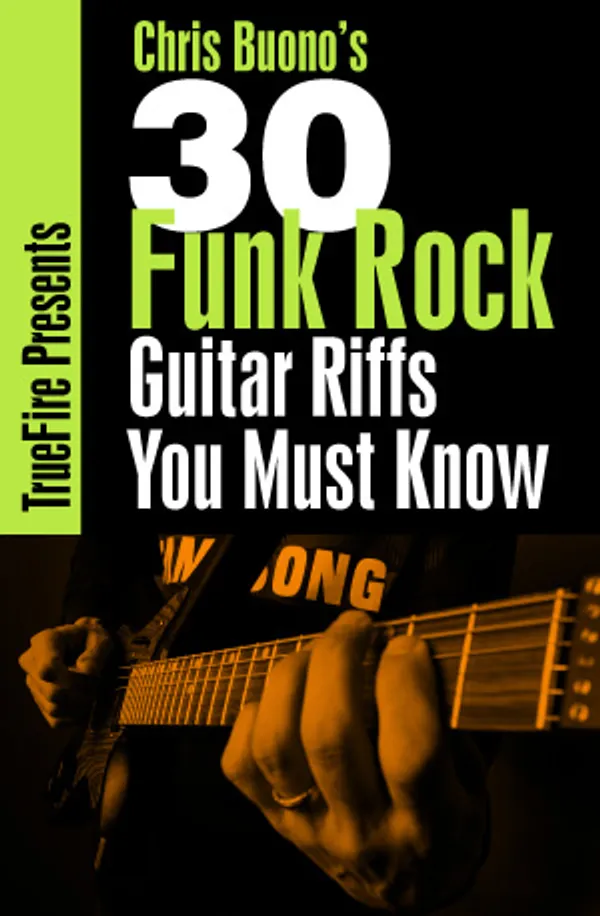
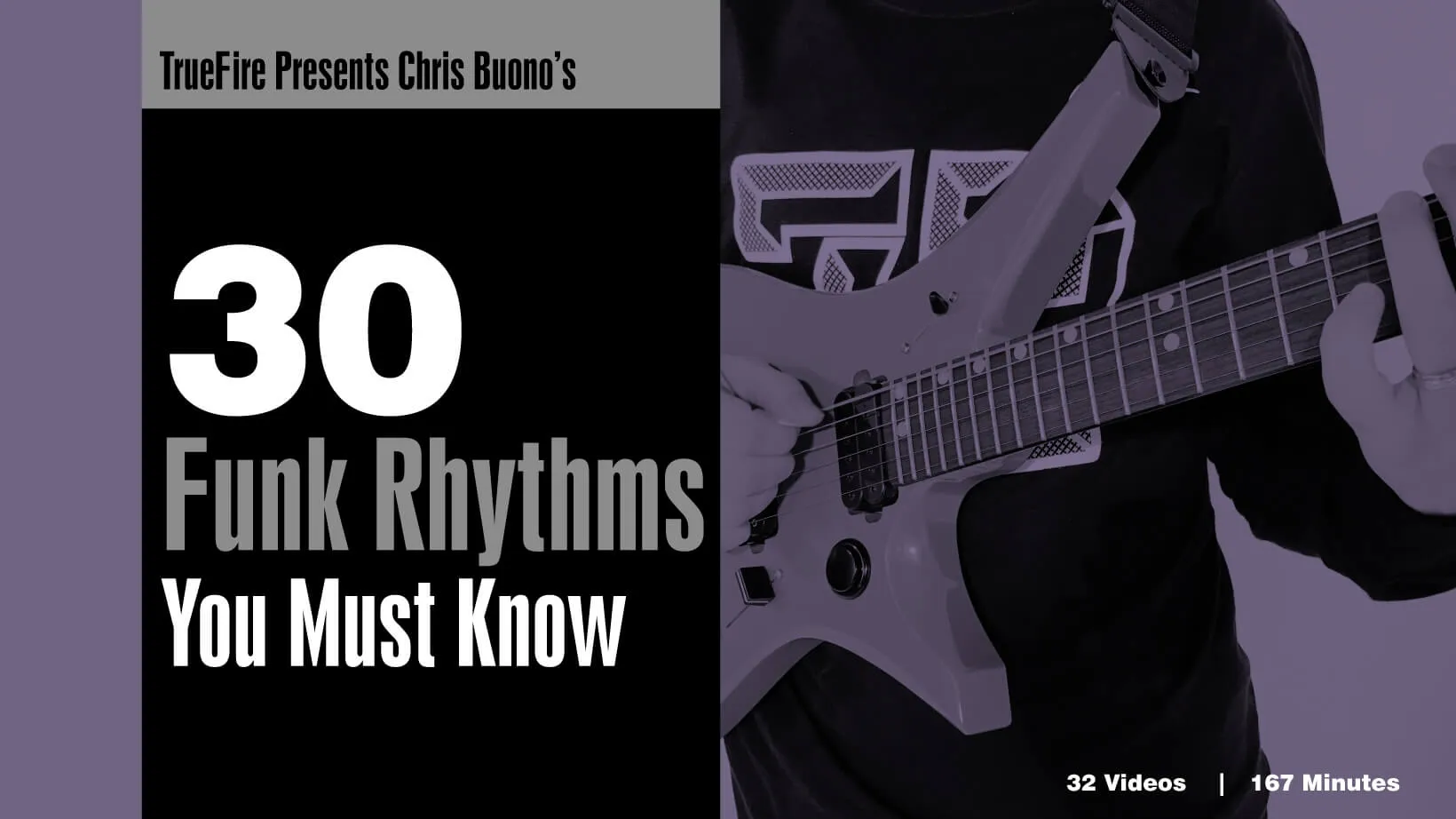
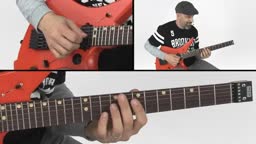
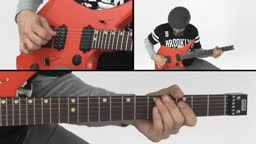
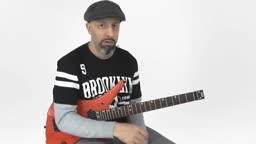
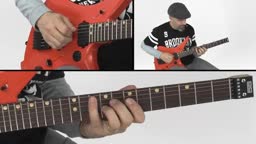
30 Funk Rhythms You MUST Know

Marty FriedmanTommy EmmanuelSteve VaiEric GalesEric Johnson

Get this course and 1,000+ more with All Access

Try 14 days free. Cancel any time.

Purchase Individual Course for $14.99
30 Funk Rhythms You MUST Know

About this course

Funk rhythms and funk guitar techniques are prevalent in virtually every genre of popular music today be it rock, blues, jazz, country, R&B, Latin and even metal. Why? Because funk’s phrasing, harmonic approaches, and percussive qualities will spice up any style and generate an energy and vibe that can only be described as infectious. Funk guitar is also a blast to play!

Chris Buono’s 30 Funk Rhythms You MUST Know will not only majorly expand your funk rhythm vocabulary and technique, you’ll also learn how to craft your own funk rhythm parts for virtually any style of music.

”We’ll work through a diverse range of funk guitar rhythms and techniques, in a variety of musical styles. This collection combines legendary funk rhythm ideas species up with some of my own approaches. We’ll explore essential rhythm approaches heard in classics from James Brown, The Isley Brothers, P-Funk as well as cult heroes who continue to inspire me such as Wayne Krantz and David Fiuczynski of the Screaming Headless Torsos.”

Chris will show you short rhythm patterns that bounce between chordal patterns and single note lines, medium tempo jams, how to lock in with classic funk approaches, NOLA funk from the French Quarter, odd-time funk grooves, deep down and gritty grooves, Lone Star funk grooves, mashed up Latin and metal funk, how to sweeten up your funk rhythm phrases, upbeat funk grooves, and dozens of other funk rhythm guitar approaches.

For each of the 30 funk rhythms featured in this course, Chris will first perform the rhythm part over a jam track, and then break it down for you section-by-section emphasizing the essential techniques and harmonic concepts in play.

All of the licks are tabbed and notated for your practice, reference and study purposes. You’ll also get Guitar Pro files so that you can play, loop and/or slow down the tab and notation as you work through the lessons. Plus, Chris generously includes all of the backing tracks for you to work with on your own.

Grab your guitar and let’s funk it up with Chris Buono!

What you'll learn

  • Execute precise chord inversions
  • Use punch comping technique
  • 30 different funk rhythm patterns
  • Understand offbeat rhythmic phrasing
  • understanding funk guitar rhythmic techniques
Release date: 05/17/2017 • 2h 47m runtime
Start Course
Sample lessons
P-Fuze '72
P-Fuze '72
Rhythm 7
Super Duper Cool
Super Duper Cool
Rhythm 11
Frankenstein
Frankenstein
Rhythm 12
Six of One
Six of One
Rhythm 18

What's included

32 lessons • 30 charts • 30 Jam Tracks

30 Funk Rhythms You MUST Know
Hey, this is Chris Buono, and welcome to 30 Funk Rhythms You MUST Know. Funk rhythms and funk guitar techniques are in virtually every genre of music today, be it rock, blues, jazz, country, R&B, Latin, and even metal. Why? Because the sky's the limit when it comes to phrasing, harmonic approaches, and the percussive possibilities. What's more, the overall energy and vibe is infectious! Bottom line: Funk guitar is a blast to play.

In this collection of 30 Funk Rhythms You MUST Know, we'll work through a diverse range of funk guitar rhythms and techniques in a variety of musical styles. This collection of funk rhythms is a combination of legendary funk rhythm ideas combined with my own approaches to the techniques contained within them. We'll explore essential rhythm approaches heard in classics from James Brown, The Isley Brothers, P-Funk, as well as cult heroes who continue to inspire me such as Wayne Krantz and David Fiuczynski of the Screaming Headless Torsos. Rounding it out will be funk rhythms that make use of various techniques including my punch comping technique introduced in my debut TrueFire course, Funk Fission.

I'll demonstrate each of the rhythms over a backing track and then break it down note-by-note, move-by-move. Everything is tabbed and notated, plus you'll get all of the rhythm tracks featuring my good friend and monster bass player Steve Jenkins to work with on your own.

Ready? Let's do it to it!
Mortal Kombat
"Mortal Kombat" is your first funk rhythm, which is inspired by a tune called "Doin' It to Death" from a James Brown side project called The J.B.'s. The band featured key James Brown cohorts, most notably Jimmy Nolen – the archetype of the funk rhythm guitar style. Released in 1973, this tune continues to make its rounds in jam sessions a million times over.

While a percussive playing technique known as chanking or scratching is commonplace in funk rhythm guitar, take notice of its absence. In fact, I'm not going to have you play a single percussive element until Rhythm 4. Another funk rhythm guitar staple is 16th notes, and those are nowhere in sight either. "Mortal Kombat" makes use of the top three strings of the obligatory dom9 chord, the use of space, and swings hard.
Repro Mechanism
Continuing to examine funk rhythms through the genius of the James Brown, we investigate our second funk rhythm with "Repro Mechanism". The vibe here is born of a funk rhythm guitar mainstay called "Sex Machine" where Phelps "Catfish" Collins lays down iconic rhythm ideas throughout. Just like "Mortal Kombat", this rhythm makes use of SPACE. While a scratch may sneak in during the B section, the intent here is to once again rock those 9th and 9(13) chords with a focus on staccato phrasing while locking in with the ever-important pocket.
Route 35
One more time staying clear of percussive trinkets, Rhythm 3, "Route 35", scales down the bar count to just two with a jam that looks back at a groove John Scofield laid down on a tune called "Jeep on 35" from his must-have A Go Go album with Medeski, Martin, & Wood.

Keeping in line with the attention paid to space in the first two rhythms, this vamp is a bit more syncopated and makes use of varied ranges of string groups. Be sure to arch your fret hand fingers so the intended open strings ring clearly and provide color to those go-to dom7 grips. At the same time, keep your strumming hand in a 16th note motion whether you're striking the strings or not. Those "ghost strokes" are what helps keep the groove intact.
Em Esu
Rhythm 4 stays within a two-bar feel with "Em Esu" – a tip of the hat to the must-know Bill Withers tune "Use Me" and his raw playing in the intro. Set in Em, this i-7-IV7 progression is played with a straight-as-can-be feel with conviction and precision. Don't be afraid to lay into it a bit. You'll notice in bar 2 you have your first official inclusion of percussive "chicken scratches" or "chanks". Simply rest your fret hand fingers over the strings and have at it with the pick hand. Just like in Rhythm 3, and for almost every funk rhythm you'll ever play, you'll need a 16th ghost motion in play to navigate the groove as well many rhythms to come.
Cherry Kool-Aid
So far, you've played fragments of the go-to dom9 chord, mostly on the higher strings. While this is good practice, there are plenty of times where the entire five string chord is called upon. Such is the case with Rhythm 5 – a 14 bar jam that shines a light on the 1976 classic "Play That Funky Music" from one-hit wonder Wild Cherry.

The first eight bars put aside any instances of chanking, only to be followed by another four bars of full dom9 chords as well as a m7b5 chord acting as a dom9 in bar 12 with space-filling chanks throughout. Focus on coordinating when you press the chord down and when you don't so you can get from chord to chank, chord to chank, etc.
Spotlight
Squeezing down to just playing on the 4-3-2 string set, Rhythm 6 points a spotlight on Parliament's iconic "Flash Light." The two-bar rhythm starts with a Cm7 voicing that has no 5th (making it a 7no5 in Mick Goodricke/Berkley speak) and is played throughout bar 1 with a few carefully placed scratches. Bar 2 takes that voicing and lowers the top note (held down by your fourth finger) a half step while the other chord tones remain fingered as they were. Two schools of thought can be applied to the change: In this case, given the bass line, the chord is a Cm6 giving this riff an undeniable Dorian feel. In other instances, this voicing shift can also be applied to a Dorian i-7 to IV7 scenario with great effect.

+ 25 more lessons

Start Course

Reviews

2 results

Dan P.

04/23/20

Well thought out and Perfectly executed!

Chris really nails it with this one! His selection of riffs and patterns will allow the working guitar player to tighten up his weekend set-list as many of the tunes presented here are cover band a-list selections. In addition he breaks down each riff in a way that the student can take something for their own playing and composition instead of just copping someone else's riff. Chris also nails the tones and feel of each style perfectly. Truefire always nails the technical stuff with great video production, excellent sound, and easy navigation within the lesson. What I like best about Chris' videos is how clearly he communicates the topic. He gives enough information to empower the student without overwhelming them. This allows students of all levels to benefit from this video and revisit from time to time to pick up another detail. Overall excellent course and highly recommended!
Lowlands

10/27/18

Great rhythm course

I like this course. It gave me a lot of new information about funk music/ musicians. There is a wide variety in rhythms and techniques Chris offers here. You have to focus on your right hand to get the rhythms nice and groovin. So this course helps to develop your righthand and right left coordinaion a great deal. Recommended!

Stop searching. Start improving with All Access.

Try 14 days free. Cancel any time.