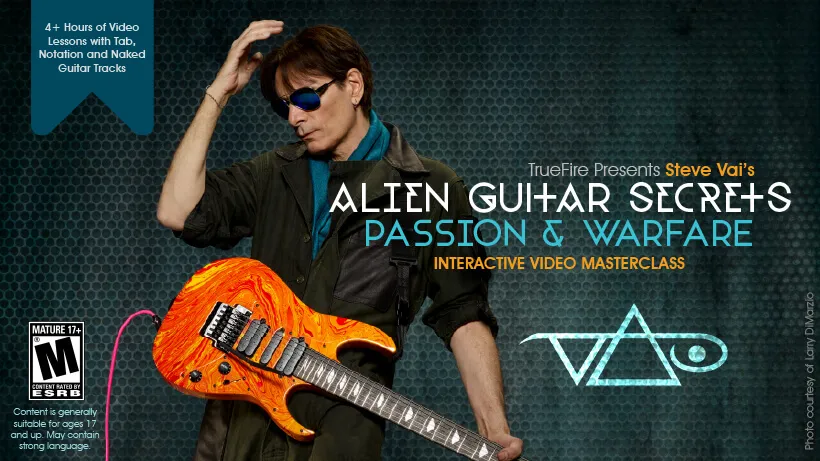
Alien Guitar Secrets: Passion & Warfare

An interactive video masterclass to help you discover and unlock your personal musical identity

Get this course and 1,000+ more with All Access

Try 7 days free. Cancel any time.

Purchase Individual Course for $24.99
Alien Guitar Secrets: Passion & Warfare

About this course

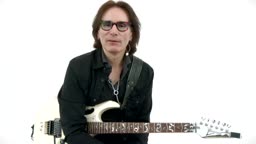
True to Vai form, this Passion & Warfare edition of Alien Guitar Secrets goes way beyond the call of educational and inspirational duty for any student of guitar, at any level of play.

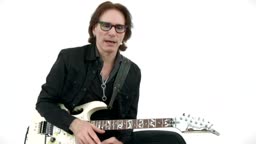
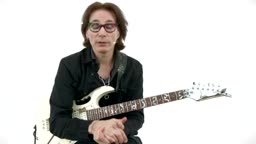
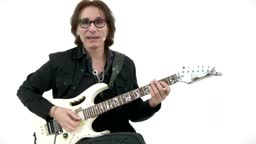
In the first half of this interactive video masterclass, three-time GRAMMY Award winner Steve Vai shares priceless insight and ingenious methods to help you discover and unlock your personal musical identity -- the very same approaches he used to achieve his own mastery of the instrument and unparalleled success as a professional musician.

Topics and methods presented in the first half of the course include: 3-Step Manifestation, Deeper Than Technique, Develop Your Tone, Exercises Build Chops, Theory, Scales & Colors, Training Your Inner Ear, The Fragrance of Chords, Intonation, Bending Notes, Vibrato, Dynamics & Phrasing, The Dimension of Listening, and The Quality of Thought.

In the second half of the masterclass, Steve treats you to revealing overviews, with select playing examples, for each of the songs on his groundbreaking Passion and Warfare album -- highly regarded as one of the greatest instrumental rock guitar recordings of all-time.

Passion and Warfare song overviews include: Liberty, Erotic Nightmares, The Animal, Answers, The Riddle, Ballerina 12/24, For the Love of God, The Audience Is Listening, I Would Love To, Blue Powder, Greasy Kid's Stuff, Alien Water Kiss, Sisters, and Love Secrets. Steve also gives you a quick rundown of his guitar and gear in a Gear Talk segment.

The video masterclass (Windows, Mac, and iOS compatible) features 4+ hours of video lessons, tab/notation for select playing examples (for complete transcriptions and notation, pick up the Passion & Warfare Songbook published by Hal Leonard).

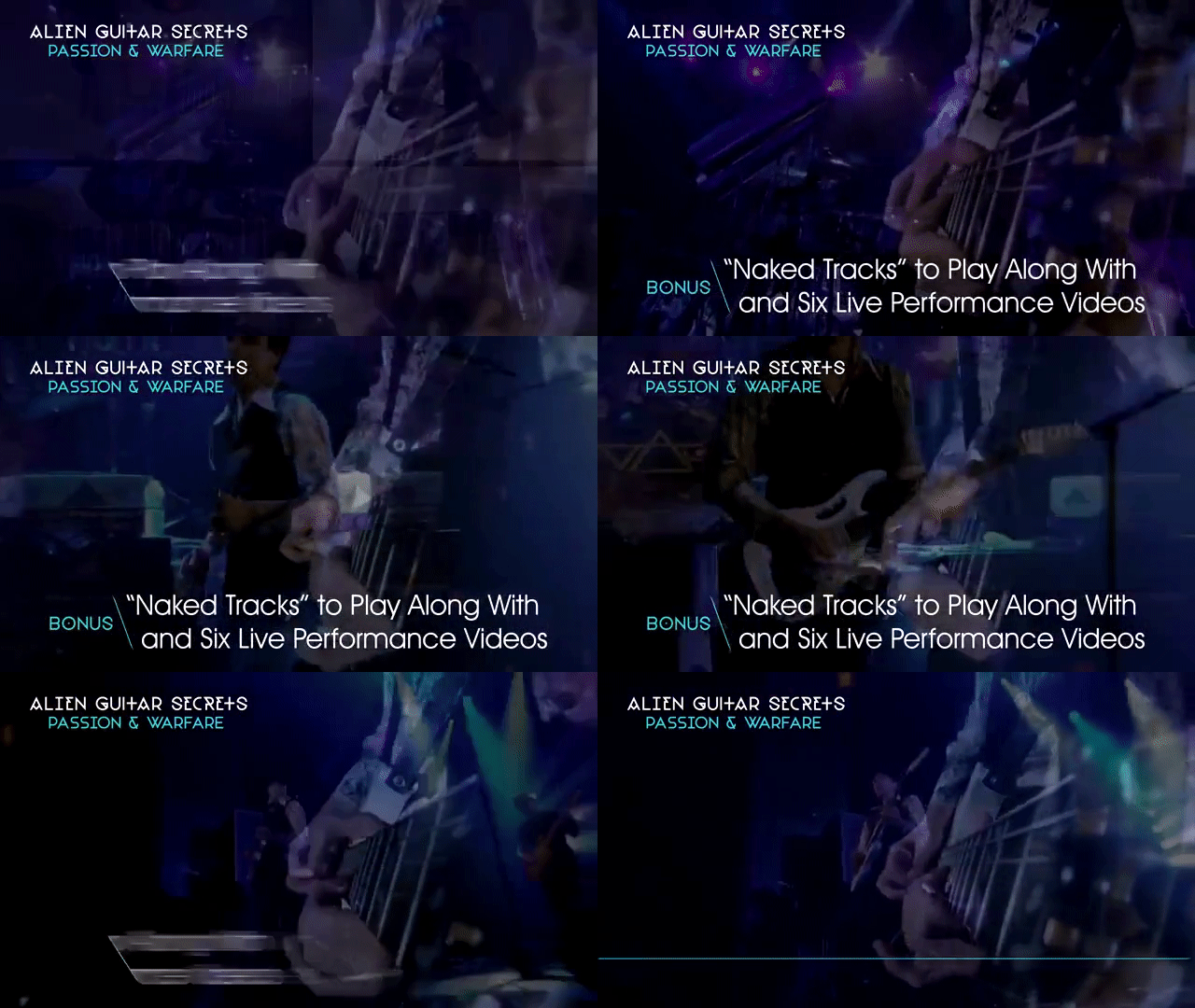
Steve also generously includes the Passion and Warfare Naked Tracks for all of the songs on the album (original tracks from the album minus the lead guitar track) along with 6 live video performances including Liberty, The Animal, Answers, For the Love of God, The Audience Is Listening, and Sisters.
Steve Vai Guitar Lessons
Steve Vai Naked Tracks
We’re so proud to welcome Steve to the family with his first interactive TrueFire course, Alien Guitar Secrets: Passion & Warfare. We’re certain that, once you immerse yourself in this video masterclass, your musicality will light up in ways you never thought possible.

Grab your guitar and pick a few Alien Guitar Secrets from Steve Vai!
“If you want to play something that you can't, you need to see and hear yourself doing it in your minds eye. It will start to happen.” - Steve Vai

What you'll learn

  • Creative approach to musical composition
  • Learning advanced improvisation techniques
  • Understanding how to develop unique melodic ideas
  • Understanding how to develop a unique musical voice
  • Understanding live performance interaction
Release date: 07/13/2016 • 4h 59m runtime
Start Course
Sample lessons
Deeper Than Technique
Presentation
Training Your Inner Ear
Presentation
Bending Notes
Bending Notes
Presentation
Erotic Nightmares
Erotic Nightmares
Demonstration

What's included

37 lessons • 21 charts • 11 Jam Tracks

Alien Guitar Secrets: Passion and Warfare
Hey folks, Steve Vai here, and welcome to Alien Guitar Secrets: Passion & Warfare. In this edition of Alien Guitar Secrets, I reflect on my record Passion and Warfare that was released in 1990, which was sort of a milestone in my career. Instead of giving note-for-note demonstrations of the songs, I approach them more conceptually (with a few technical things) to give you an idea of my thinking pattern behind all 14 songs on the record.

Also in this course, I'll be talking about some of the things in my career that I see as being vital in the evolution of my independence as a musician and my love for the instrument. These are some of the more esoteric principles, so to speak, that I've noticed have been very helpful for me in my career, as well as some of the academics of playing and the way that I've made my way in this business we call "music".

My goal with doing this video is to hopefully inspire you to explore your own unique voice on the instrument. So grab your whammy bar and octave divider, and let's get started!
3-Step Manifestation
When I look back at my career, there's some real stand out moments. One of the things that I've recognized is that there's some things that never change, and one of those things is my excitement for the instrument. When you have the interest or passion to play the instrument - and it doesn't have to be a wild passion, it can just be an interest in playing it - it really is your best friend.

When I was young and discovered the guitar, I knew that it was an infinite instrument in that I was never going to tap it out or reach the end of its ability to be unique or creative. You may believe in your head that you've taken things to a certain point, but there's always room to grow. If the universe is infinite, then so is everything in it! The most exciting thing to me when I was young was the realization that I could have an idea, work on it, and then suddenly it could be there and happen. This is the pay-off. This is really what you're doing.

To manifest anything is basically a three step procedure. This applies to the guitar, and really anything you'll do in your career: Whether you're writing a song, wanting to learn a particular riff, looking for the right guys to be in your band, or whatever your goals are, I would encourage you to consider this technique.

The first step of the process, with which you can achieve virtually the manifestation of anything, is wanting something or knowing what you want. It can be anything. As far as what we're discussing here on the guitar, you can have a simple desire to want to play the instrument a particular way. Maybe you want to be in a band that plays contemporary jazz or blues, maybe your desire is just to play chord changes on a beach, or perhaps you'd rather sound like a classical guitarist; that's fine!

Whatever your desire is, it's really important to be able to be sincere with it. A lot of times what we think we want is really just an "egoic" desire, meaning that we want to be great so people recognize us, so we get respect, so that we're successful in the eyes of the world. And there's nothing wrong with any of that, but anyone I know who has that is just a byproduct of their passion for the work that they do. The worldly success is just a consequence of focusing on your passion. So, when I say knowing what you want, what I really mean is can you sit, think (without thinking about what others think you should be doing, what the trends are, or what goes into making a well-rounded musician), and identify your pull? If I had a magic wand that allowed you to play anything you want on the guitar, regardless of what anybody thinks, what would that be?

The way you know that you're moving towards it is when you start feeling enthusiasm within yourself - that's the goal, or the honey so to speak. And when you're able to start honing in on what it is that you like, that sense of enthusiasm will grow.

The second step is very powerful in the manifestation of anything you desire. It's something you can work on that actually doesn't have anything to do with the physical instrument, but is actually at the core of anything you're going to accomplish. What it is, is your ability to visualize. So what does that mean? You can only achieve what you can believe you can achieve, and your ability to visualize yourself playing something is extraordinarily powerful. Matter of fact, even in Quantum Physics (in which I'm no expert) it's part of the process of manifestation - first there's a thought, and then there's the visualization of the thought. Whenever I'm talking to musicians who have a particular thing they'd like to achieve, I tell them to practice visualizing themselves doing it - actually visualizing in their mind's eye, creating a picture of themselves doing it. The more you are able to see yourself playing something, much more proficiently than you can now, the stronger your guide to getting to where you want to go.

I didn't realize it, but this is what I was doing when I was 10 years old. I would put on my headphones and steal my sister's Led Zeppelin or Alice Cooper records and lay in bed, imagining this guy (me) playing the guitar in an effortless, elegant, beautiful, profound, organic, "wizardly" way, just uplifting the audience and delivering something that was amazing, cool, and unique. So, you become what you think about. Whatever is in your mind, that's the predominant vibration that's going to manifest in your life. I'm still working on it, as you can do by continuing to refine the picture in your head of what it is that you want to be. It's a powerful practice, because without the visualization of something you're just meandering really, just waiting for something to happen.

The third step in this process is perhaps the most difficult, as it's the stage where you have to allow things to happen: You have to allow your visualization to manifest. Well, what does that mean? You need to align yourself with your vision. And when I say that, I mean that it has everything to do with the quality of your attitude and perspective. Aligning yourself with your vision means finding that enthusiasm and cultivating it in almost anything you see. In anything you're doing on the instrument, find the victory and rejoice in any little achievement. Even when you can just start connecting the notes on the guitar, treat it like a victory. That's how you align with your vision. When you get the enthusiastic ball rolling, nothing in the universe can stop it; in fact the universe will work with you in making it grow.

This three step technique we're doing all the time anyway, it's not something that's new. Anything you see around you was manifested because (1) somebody thought of it, (2) somebody visualized it, and (3) somebody aligned themselves with bringing it into the world with some sort of enthusiasm. It's a very powerful technique, and whatever the quality or vibration of your attitude is towards the accomplishment, that's what will manifest. If you're feeling very good about it, and you're enjoying the process, that's a good sign! But if you're criticizing yourself, telling yourself "I suck", or "everybody else is better", or if you have fear of not being good enough, then that's what will manifest. Whatever you really, really want, you'll get; and what you really, really don't want, you'll get. That's not my theory or philosophy, it's just the law of the universe.
Deeper Than Technique
I'd like to talk a little bit about technique, but just a little bit. The reason I don't usually dive deeply into technique is that it might not be the thing for you, and I feel a little uncomfortable teaching a technique that might not be natural or organic. So what I prefer to teach in this realm is to actually find in yourself the technique that feels right. There isn't one technique, as you can tell, with many different types of players, some people holding the pick one way, some vibrating notes other ways, etc.

Now there are certain bad habits to avoid that we can get into, but opening yourself up to your instincts is the best way to discover the best technique for you. I can show you my technique, and you might find some inspiration in it, but you're going to be most comfortable playing in your own style. I'll go through certain things that I went through when I was younger, but more importantly we'll be going deeper than the technique.

But, there is one thing I'd like to talk about that hopefully will resonate with you: The level of technique you need is based on what your needs are to express yourself. Some people like a lot of technique, some people just need a little to get their point across. Nobody's keeping score (unless you're voting in a guitar magazine).

In any field, whether it's sports, music, business, there's a period you go through where you are focusing on preparing the vessel. You're going to go through a long period of time where it's nothing but hard work. It's also known as the "10,000 hour" rule. In the field of music, your need for technique will vary greatly depending on what it is you want to achieve. If you want to be a concert pianist or an accomplished classical guitarist, you're going to have to spend a lot of time preparing your vessel. To be honest, music was always very natural to me, but the guitar wasn't - I had to work really, really hard. I always felt, and still do, that anyone who put in the hours that I put in on the instrument would have tons more technique and ability than I would. I was a very slow learner, but I loved it. And that's the thing - it never feels like work when you're following your dream. Passion eliminates time. It puts you into a timeless dimension of now. There's no work in it - I loved every minute of those hours upon hours of preparing my technique.

There comes a time in every creative person's life, and when I say that I mean everybody is creative, where you've mastered the technique - you've gotten to a technical point in your playing that whatever you want to play is virtually effortless. It flows easily with no thinking, there's just confidence and command. That's what the "10,000 hours" gets you, or if you want to be a virtuoso, maybe its 30,000 hours. Anyway, the bottom line is that there comes a point where all of a sudden it goes from work to something that feels natural. This is where you have to keep pushing, be patient, and enjoy every little accomplishment to avoid getting frustrated in yourself. This keeps the momentum, or passion, going.

This is difficult for a lot of young people, because they don't feel that passion, which is worrisome in that they don't have a passion for something. In terms of that, passion is completely overrated. It's not something that's this burning desire - it's really just this really sweet moment, starting out as simple as realizing it's something that you want to do. Then you start to find enjoyment in it, and then there's some payoff in it. Passion is almost like smelling a rose; there's this faint moment where there's no thought in your mind at all, only the intoxication of the fragrance. It's a momentary excitement for something that then develops momentum, but start slow and don't beat yourself up just because you're not passionate about it. It comes with the right attitude and enjoyment in what you are doing.

Developing your technique is easy with passion. It's fun, but then comes, like I said, the time when you must go deeper than the technique. Technique is just your tool - it's the letters in the alphabet to a poet. They're important, but the letters themselves are not the poetry. The notes themselves, are not it either. The combination and choice of the notes and how they resonate with you on a visceral level. How a melody or a solo feels when you play it, or when you're in the zone of improvisation where you're flying high. You're not even thinking - technique is way in the past, everything is just at your command and you can go deeper to enter the zone of pure inspiration. Inspiration comes instantaneously in a seamless, flowing manner that's almost unconscious to you. The more present you are with your playing, not thinking in technical terms, the more you can listen, observe, and allow you imagination to flow into your work. Now that I've told you this, you can experiment with it. You need to get something to a point where you don't need to think about the mechanics or academics about it.
Develop Your Tone
There are so many ways that you can find out about the academics of playing the instrument. Matter of fact, TrueFire has a tremendous amount of some of the most amazingly educational videos from some of the greatest guitar players in the world that can really dig down deep into certain techniques, in many areas better than I can!

When I was young and honing my skills, the most fascinating thing about playing the instrument was not being able to do something, working on it, and then being able to do it. So, one of the things that I tell beginners or anybody that's developing their technique, is that your most important tool is your ability to listen.

Listening (without judging, criticizing, or labeling) is how you develop your tone. Your tone is in your fingers and in your head. It's the process of listening to how you want to sound and hearing things from the outside world that are inspiring in the way people play. The sound of the notes should be at the forefront of any technical development that you make.

So when you're first starting out, and I even do this now, listen carefully and experiment to find the tone that you want. When hitting a note, experiment with every way you can use the pick. There's great variety, and it's wonderful that it's at your command to create a melody, dynamic, or phrasing, any way you want. There's no right or wrong way, there's only what you prefer. This is where your ability to visualize (the second step), comes into play. As you're trying to find that tone, imagine how you want it to sound and critique if it's actually what you want.
Exercises Build Chops
When I was young, the first thing I learned was exercises. I had what I call "The Vai Advantage": Joe Satriani was my guitar teacher for three years, beginning when I was 12 years old. Joe and me grew up in the same town, and I went to him for lessons every week. I sat next to greatness, watching, learning, and absorbing some of the stuff that I'm passing along.

One of the first things that I started to do when I wanted to get my chops in order (but first make sure to learn a song when getting started) was exercises, going through them for an hour a day. I'll go through some of them here, meant to be played over a metronome slowly, listening to every note until they sound great. When you want to start going faster, make sure you can play slow perfectly and then increase the speed. This is where patience comes in, and being able to pull yourself back when you want to do something overzealous and that's out of your control. If you start overshooting your ability to connect, you're going to sound like an idiot (or, rather, like an amateur).

Coming up with all sorts of exercises is a lot of fun, such as trilling as long as you can in every place possible. It's harder than it looks, especially if it has to sound good! I used to make up libraries of exercises, because it's actually a lot of fun when you can't do something, work at it, and all of a sudden are able to do it. It's my biggest thrill in playing the instrument. So, again: start really slow and perfect, find the right tone, and do exercises until you're blue in the face!
Theory, Scales & Colors
Now let's talk briefly about scales. Most of you already know what scales are: just a series of notes. There's a lot to say about scales and the theory behind them, but let's just talk a little bit about the music theory here. I get asked a lot: "How do you feel about music theory versus playing from the heart?", which is one of the stupidest questions I can ever get asked. It's like saying if you have one you can't have the other. You can have either of them in any degree, it's just based on what you want to do.

So, in the realm of developing your understanding of scales and music theory, the rule of thumb is that if you're interested, nothing will stop you from understanding it. If you're uninterested, nothing will help you retain it. And if you're not interested, don't worry about it - you don't need to know one bit to be an effective, incredible musician. But you do have to have a good ear, which takes a tremendous amount of developing.

Personally when it came to music theory, I wanted to know everything about it. I thought little black dots looked like art. I wanted to know how to write music and have total command over it, because instinctively I knew that the process of composing was infinite. I especially love composing orchestral scores - I love thinking about it, visualizing it, and then manifesting it, and suddenly there it is being performed. Incredible. But, you don't have to understand music if you don't want to and can still be very effective.

Back to the technique - I could show you scales and explain them, but you can get that information someplace else. I'll say that scales are like colors; when learning them, practice them from lowest to highest and then backwards (and if you make a mistake, start over from the beginning), and eventually what becomes important is the color or flavor of them. And with modes, besides learning the fingering and theory behind them, memorize the color of it. Again, you can learn them, but you don't have to. I like knowing all the scales that I can, but more than that I like understanding the flavor of the scales. When practicing, that's what you listen for.
Training Your Inner Ear
In this next segment, I'd like to talk about one of the most important things to develop in your style, and that's your ears. There's many ways you can do this, some may seem more natural than others. There's obviously listening to your favorite artists and copying the songs on the record, or getting a book and reading chords is fine too. Transcribing music - meaning the process of listening and writing down the music in manuscript form - was helpful for me, especially during my early days with Frank Zappa. It helped with my ability to translate an inner musical idea to my fingers. And that's really what it's about, or so I believe, doing so effortlessly, and without any real thought involved and just having it flow out.

To do this, you need to develop the relationship between your ears and your fingers. You want your fingers to develop eyes on them, so to speak. One great way to get started is when playing anything, especially in the beginning, take a segment of time and sing everything that you play. Now, for some it may be very simple, but some of you may be surprised how difficult it may be, as everybody has a different level of "inner ear". If you can't connect your ear with the notes that you're playing right away, don't worry, because you can develop it if you have the patience. Being able to sing what you play is going to be very helpful in identifying with an emotion or a visualization and then getting it out on the instrument in an audible way.

When you're doing your exercises or scales, it's always a good idea to sing everything you're playing. You'll know which notes are right because it will resonate with you. Put your attention deeply within a single note, sing it, and then try to find another one. You'll know when you nail it! Eventually, you can get to the point where you'll be able to sing anything you play.

There are other things you can do to develop your ears too - for example, sing a harmony (such as a 5th, or a 3rd, or maybe even a 2nd) to what you play. I used to make a tape of me playing various intervals for about an hour, followed by me saying out loud "a 5th", "major 3rd", etc. Then I'd listen back to that, hear the interval, focus on it, try to guess what it is, and then get the answer. This will advance your ability to be effective as a songwriter, soloist, and as a musician in general. Everything we go over is important, but this is vital.

I'd encourage you to conceive as many possible things as you can do to develop your inner ear. I used to take two pages of manuscript paper and just write two notes - C and D for example. I'd sing and write them out, filling both pages, and then I'd read it back. Once you have it down, add a note and sing them in your head. Continue with this, write them down, page after page, and after a while there will be nothing that you're unable to write and hear in your head. And that's liberation.

+ 30 more lessons

Start Course

Reviews

28 results

heathfin

Verified buyer

09/13/26

Excellent course

metadata13579

Verified buyer

07/03/26

For The Love of Vai

The only Vai course available Its what you would expect and more than just technique his philosophy and approach on some of his best solos.

mgrinstead

Verified buyer

12/03/25

Steve Vai - AWESOME

Steve Via's music is whimsical and indulgent and I think its fantastic. I've been a big fan since Passion and Warfare - one of my favourite albums. I've seen him live and met him and he was gracious, kind and considered. I struggle to play anything he has done but I keep trying.

Mike1836

Verified buyer

09/02/25

Great insight in to SV’s approach.

Joe

03/28/24

very good

Surprisingly very good, very interesting job done. Thanks STEVE

Stop searching. Start improving with All Access.

Try 14 days free. Cancel any time.