





Guitar Lab: Getting to Know the Neighbors

Intensive examination of neighbor tone applications

Marty FriedmanTommy EmmanuelSteve VaiEric GalesEric Johnson

Get this course and 1,000+ more with All Access

Try 14 days free. Cancel any time.

Purchase Individual Course for $5.00
Guitar Lab: Getting to Know the Neighbors

About this course

One of the most effective melodic tools is the use of neighbor tones. This concept involves lower and/or upper neighbor tones which are used to approach a target note. These neighbor tones may be diatonic and/or chromatic. Not only is this technique powerful way to embellish basic melody, but it is also an effective way to break out of the pentatonic/mode rut that so many guitarists fall into.

If you compare guitarists to horn players and piano players, you will readily see that guitarists learn to play rhythm and then move into lead. Rarely do they play melody as horn and piano players do from day one. Hence, this concept of playing a melody and embellishing it with neighbor tones is not a typical part of a guitarist's vocabulary.

This course will present what I term "sonic snapshots" to aid you in identifying typical harmonic and melodic moves. You will learn to view arpeggios in all three inversions with a one note-per-string layout on the fingerboard. These will be your point of reference for applying lower and upper neighbor tones. These lessons will cover 2, 3, 4, and five note patterns which you will apply over the jam tracks that are included in this course.

What you'll learn

  • Navigate between Mixolydian and Lydian b7 based on harmonic context
  • Target upper and lower chord tones systematically
  • Apply low-high-middle pattern approach to Lydian b7
  • Construct five-note melodic patterns using chord tones and neighbor tones
  • Recognize Lydian b7 as 4th mode of melodic minor
Release date: 09/04/2013 • 4h 08m runtime
Start Course
Sample lessons
Zorba The Greek
Zorba The Greek
VII to I
Motown Vamp
Motown Vamp
ii to I
One Note-Per-String Arpeggio
Root Position
Two Note Patterns
Two Note Patterns
Low High

What's included

46 lessons • 44 charts • 1 Jam Tracks

Getting to Know the Neighbors
One of the most effective melodic tools is the use of neighbor tones. This concept involves lower and/or upper neighbor tones which are used to approach a target note. These neighbor tones may be diatonic and/or chromatic. Not only is this technique powerful way to embellish basic melody, but it is also an effective way to break out of the pentatonic/mode rut that so many guitarists fall into.

If you compare guitarists to horn players and piano players, you will readily see that guitarists learn to play rhythm and then move into lead. Rarely do they play melody as horn and piano players do from day one. Hence, this concept of playing a melody and embellishing it with neighbor tones is not a typical part of a guitarist's vocabulary.

This course will present what I term "sonic snapshots" to aid you in identifying typical harmonic and melodic moves. You will learn to view arpeggios in all three inversions with a one note-per-string layout on the fingerboard. These will be your point of reference for applying lower and upper neighbor tones. These lessons will cover 2, 3, 4, and five note patterns which you will apply over the jam tracks that are included in this course.
Zorba The Greek
This lesson is an example of what I term a "sonic snapshot". By taking a particular tune and relating either a rhythmic, harmonic or melodic idea to that piece of music, it makes it easier to perceive patterns and access that information to whatever you're playing at the moment.

This lesson covers the VII to I harmonic move which can then be a basis for melodic moves.
Motown Vamp
This lesson is an example of what I term a "sonic snapshot". By taking a particular tune and relating either a rhythmic, harmonic or melodic idea to that piece of music, it makes it easier to perceive patterns and access that information to whatever you're playing at the moment.

This lesson covers the ii to I harmonic move which can then be a basis for melodic moves.
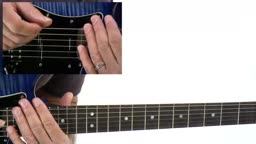
One Note-Per-String Arpeggio
This lesson covers the major triad arpeggio in a one note-per-string form in root position in the key of C. This will involve seeing the information in a diagonal line on the fingerboard that moves from right to left. It is absolutely essential that you build a foundation of knowing these notes not only in letter names but in scale degrees.
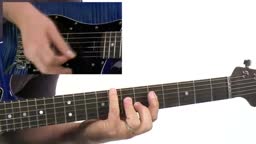
Two Note Patterns
How we get into melodic patterns which are based on an approach tone moving to a chord tone. Because will be using a lower neighbor, we will term these patterns as low - high. In these examples, the lower neighbors will be a combination of diatonic and chromatic tones.
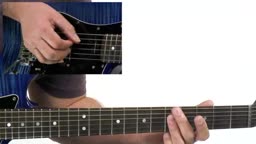
Two Note Patterns
This lesson will reverse the previous lesson in that we will be using upper neighbors which then descend to our target chord tones. In all of these examples, our upper neighbors will be diatonic.
Three Note Patterns
By taking the information from the previous two lessons, we are now able to create three note patterns. In all of these examples, the target chord tone will be the middle note of our three note pattern. This lesson will use the low - high - middle formula.

+ 39 more lessons

Start Course

Reviews

4 results

red52

10/14/20

Know the Neighbors

Like most of Brad Carlton's courses, Getting to Know the Neighbors is based on cognition. Do not expect to learn blistering licks, jaw dropping techniques or any new fast runs. This course is to enhance the guitarist's ability as a musician. For this course to make sense the learner should have an understanding of basic music theory, if not, the course will not make sense. For those that have an understanding of music theory will see great value in this course. I read a quote many years ago, "the simplest things are the most profound". This course proves this quote to be true. Buy it! (not recommended for absolute beginners)

Leedelta

12/15/18

Another Carlton Classic

An ear opener of a course. Teaches how to create be-bopish lines that can be used in any style of music. It starts off easy but slowly builds on a few foundational ideas to create some technically challenging ideas. If you like the ideas of exploring the idea of embellishing basic triads with neighbour tones then this is the course for you. I would also suggest Frank Vignola's Understanding andaApplying the chromatic scale course as an add-on.

droberts77

Verified buyer

11/30/18

Comprehensive

Great course that takes a simple idea shows how it can be extended to a highly complex basis for all styles

ahab69

Verified buyer

11/20/18

great in-depth lesson and very informative way of viewing the fretboard

Stop searching. Start improving with All Access.

Try 14 days free. Cancel any time.