Mentoring moves music forward. Son House mentored Robert Johnson. Buddy Guy mentored Eric Clapton. Wes Montgomery was mentor to George Benson. Dennis Sandole to Coltrane. Joe Henderson to Chick Corea. Miles Davis to Quincy Jones to name just one. Mentor and protege -- the lifeblood of music. Lessons learned and insight gleaned from experience is passed from player to player, from generation to generation. Sure, we should all be so lucky to connect with the quality of mentoring as mentioned above. Well, dear friends of the 'Fire... today happens to be your lucky day.
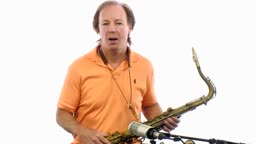
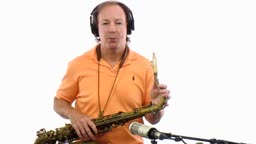
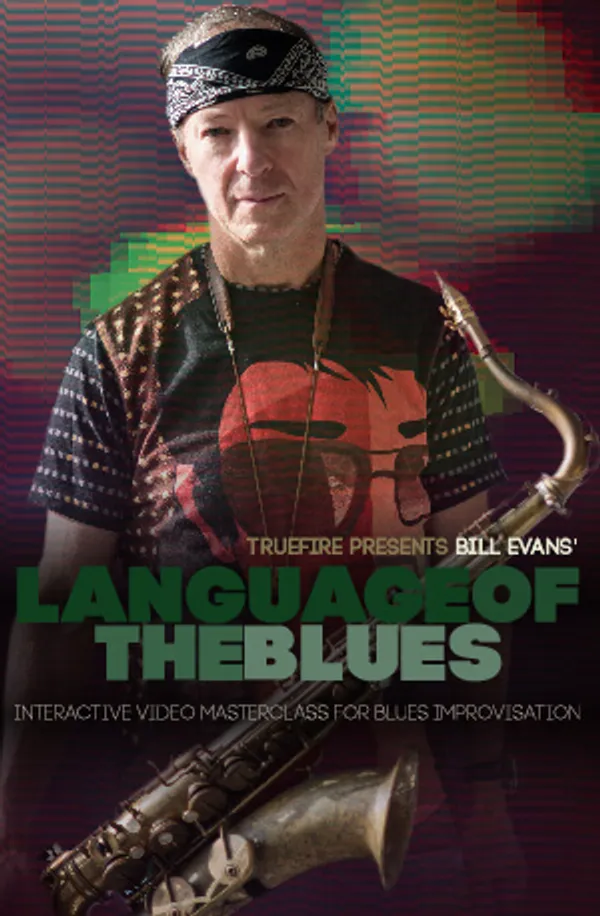
It certainly was our lucky day when we first met saxophonist Bill Evans. Bill's musical pedigree is impeccable; joined Miles Davis at the age of 22 and recorded six records with him; three albums with John McLaughlin and the Mahavishnu Orchestra; 19 solo albums spanning all styles of music; ample Grammy nominations; co-led bands with many top guitarists including Mike Stern and Robben Ford; and many widely acclaimed projects with Herbie Hancock, Lee Ritenour, Dave Grusin, Willie Nelson, Bela Fleck, Mick Jagger, Allman Brothers, John Scofield, Carlos Santana and so many other major league artists. If you listen to jazz, rock, soul, funk, hip-hop, reggae or fusion music... your ear has been tickled countless times by his searing sax solos.
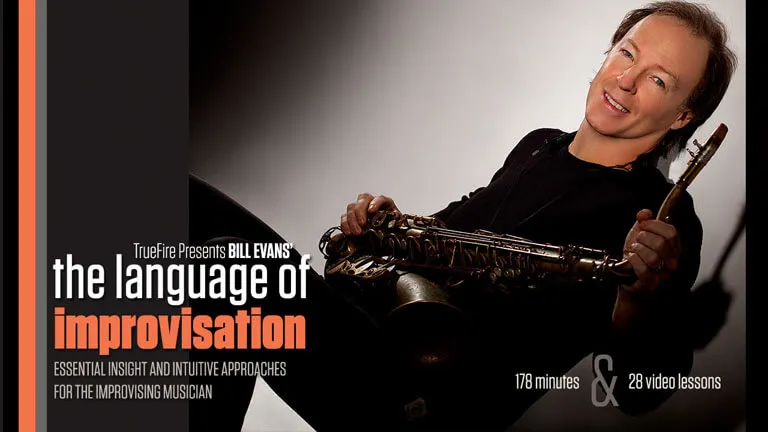
Much to our delight Bill's extraordinary musicality is complemented with a passion and gift for education. His standing-room only master classes on musicianship and the Language of Improvisation are mesmerizing learning experiences for students across all instruments, styles and levels. Bill has mentored many players over the years but now, thanks to his willingness to lay it all down in this interactive video format, we can all become his proteges.
This is NOT a saxophone course per se. Matters not what instrument you play -- The Language of Improvisation imparts a wisdom and attitude that will benefit any musician, at any stage in their development. Bill's tutorials, examples and demonstrations not only clearly define the improvisational process, they guide you down an accelerated learning path free of tedious theory and exercises. Your level of understanding and your improvisational abilities will be lifted within the first fifteen minutes of digging into the course.
Bill covers a lot of territory in The Language of Improvisation; why Bebop is so fundamental to improvisation, how to learn to listen, how to build your vocabulary, the 2-5-1 and why its pivotal for all styles, how to tell a story with your solos, best practices for building solos, modal improvisation, intonation, the bandleader's perspective, swing, dynamics, practicing tips and much more.
All of the concepts that Bill presents in the course are illustrated with bebop, jazz, funk, soul and blues playing examples. Bill also includes several playalongs during which you will trade phrases and solos with Bill as you put his teachings to work in a musical context. All of the examples and playalongs are performed over killer rhythm tracks that are also included in the course. Plus, all of the good stuff is transcribed, notated and even tabbed for guitar players.
Lucky days are indeed ahead as you join us on this enlightening discovery of the Language of Improvisation through the eyes and ears of one of the most accomplished musicians walking the planet today.
What you'll learn
Apply bebop language to slow blues progressions
Use space effectively in improvisation
Outline chord tones to create meaningful melodies
Repeat melodic ideas over chord changes
Build solos that start simple and gradually increase in complexity
In this introduction, I will explain how I relate learning how to improvise with learning how to speak a foreign language. Improvisation is broken down to its simplest form. Think of it as going from words to sentences and finally to learning how to tell a story on your instrument. When the beginning student can relate it to learning a new language, they are on their way to becoming a musician who can not only improvise, but someone who can tell their own personal story on their instrument.
I discuss in depth how to look at improvisation on any instrument. Before you can express yourself on your instrument, you need to know the building blocks necessary to accomplish this. I once again stress how you must relate improvisation to telling a story, starting with the words, sentences, and phrases. You have to learn the words first before you can make sentences out of them. You then have to put your sentences together in order to tell a story. The more familiar you are with this concept, the easier it will be for you to become an accomplished improviser with an unlimited amount of ideas. You will be free to express yourself and tell a story every time you pick up your instrument!!
Here I am demonstrating a jazz solo while playing on a blues in Bb. I keep the solo simple in the beginning and make it more complex as the solo progresses. Take your time when improvising and “ telling your story. “ The more you take your time, starting with simple phrases, the more interesting your solo is going to be. By taking your time, you leave something for yourself to play in the middle and the end of your solo. The anticipation of some great lines is something that keeps the listener interested in listening to you improvise.
I am playing on a Blues in Bb .I start my solo by playing very simple. I’m not playing fast lines in the beginning, or trying to play everything I know in the first 2 minutes of the solo. I’m putting together the “words “and “sentences “I spoke about in the beginning of the course. I want the listener to hear the words, sentences, and phrases. We’ll analyze it later. Listen to the dynamics. I push some notes, bend some others, and swing my phrases in a Do-da-Do da fashion. I’m not trying to sound like a robot either. When you improvise, you want to have feeling. No matter what instrument you play, you have the ability to play soft, loud, slow, fast, etc. Use all of your options BUT within the guidelines of this course so that your solos MAKE SENSE AND SOUND GOOD!
I like to describe Bebop music by relating it to looking at a road map. You have all of the guidelines in front of you to follow along. If you look at most Bebop tunes, the chord structure has a pattern you can follow from the beginning to the end. You just have to use your words and sentences that we have been discussing, and tell a story within those guidelines. Look at Bebop as an exercise in learning how to play a solo within a particular series of chords. The chords are already telling you where you are going to go! Use the same ideas I discuss through- out the course while learning how to play Bebop. II/V/I’s are a key element to playing bebop music. Once you get comfortable playing Bebop , this will enable you to become comfortable playing on ANY kind of music ! It’s like an all – in – one way to become a good improviser! Trust me on this.
This is important. Listening is one of the most important things you can do. Learn how to understand what a person is playing from a technical AND theoretical point of view. How are they swinging their notes? How are they building a solo? What are THEY trying to say? What are they doing to add color to their solos? What’s unique about those notes? What do they do best and how do they do it? Ask yourself all of these questions when listening to someone play. Then try to incorporate it to YOUR playing. You want to constantly add to what you can play. You are always trying to say more. I am on a constant push to be able to say more with my own playing. You will do this forever. The more you can say on your instrument THE MORE FUN IT IS TO PLAY AND THE BETTER YOU SOUND TO THE LISTENER. Maybe add a new phrase every day for a week, as an exercise. Or learn a new song. Memorize a new set of chord changes. Learn one new bebop tune per day. CHALLENGE YOURSELF. BUT…KEEP IT SIMPLE.
I demonstrate 3 of the most important scales. Major, minor, and dominant 7th and describe how to practice them and use them in a solo. I show you how they can be a starting off point to your vocabulary when learning how to improvise. Learn them in every key. Play them slowly, fast, medium, swing, up, down, every way possible! Really get to know them and you will play better. These are chords you will find in just about any song you will ever play. Give them the proper respect they deserve.
One of my favorite courses ever. Been enjoying every lesson from it, still a lot to learn before moving on to another course. But what a great investment this one
J
JohnandJimmi
Verified buyer
01/23/23
The Language of Improvisation für Tenor Sax
The lessons are really good for understanding all the complicated stuff. I like the manner of Bill Evans to ground improvisation. Sometimes it would be good to analyze a little bit more the examples he is playing (for instance: II-V-I, bebop-blues: I cannot immediatly hear the chords, i have to see them too). But I'm a little bit slow iI think ..:-)
J
Jason
07/30/22
Thought provoking course
I really liked this as a discussion. Most of the horn lines were beyond my guitar playing ability, but that didn’t really matter as the tips and approaches were very useful - especially how much mileage you could get out of variations on a single line. It opened up a new way of approaching what I’m doing. Great course
S
SongYY
Verified buyer
12/27/21
Must have!
This class is awesome! Even Bill is no a guitarist, but this course is really helpful for improvisation.
Take Evans’s advice and reminders to find out right way to build up improvise skill no matter what kind the instrument that you choice.