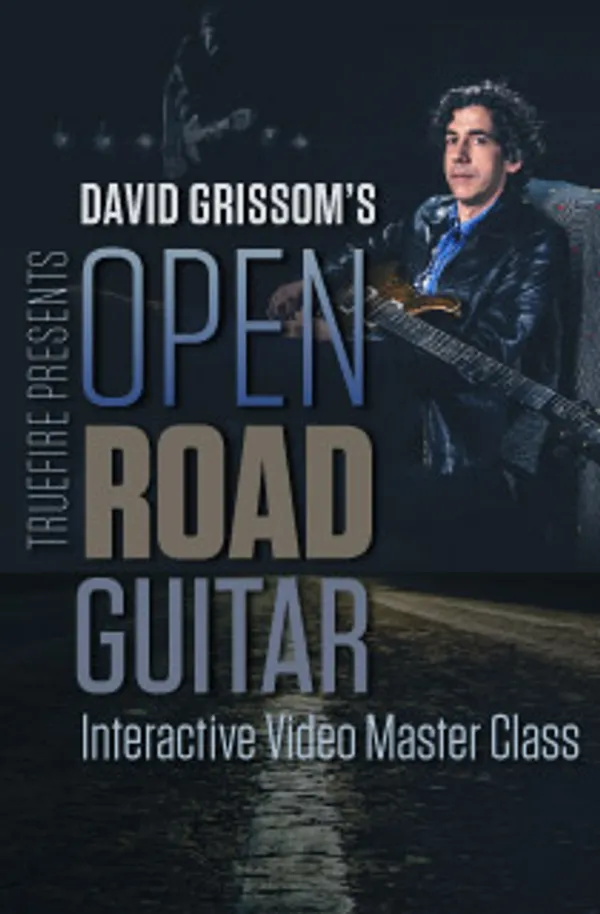
David Grissom has toured and recorded with Storyville, John Mellencamp, Joe Ely, Allman Brothers, Dixie Chicks, James McMurtry, Webb Wilder, Chris Isaak, Robben Ford, Ringo Starr, Buddy Guy, John Mayall and many other brand name bands and artists. He’s also got four critically acclaimed albums of his own under his belt.
Fortunately for we students of the fretboard, David is also a passionate and generous educator who is willing to pass on what he’s learned from his own mentors as well as lift the hood on the key concepts and techniques that he’s developed on his own. David’s first TrueFire course, Open Road Guitar went directly to our Top 10 and remains there today.
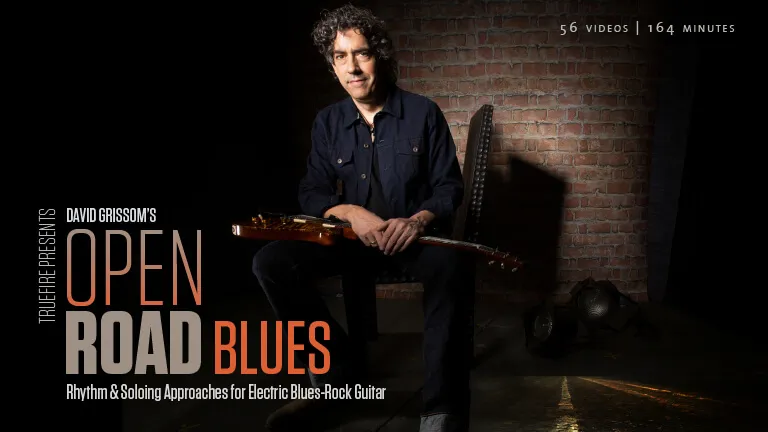
Davids signature sound is deeply rooted in the blues and his signature approach stands out in any blues or blues-rock setting. David presents a wide range of his rhythm and soloing concepts in Open Road Blues.
“The expressiveness and raw power of the blues are the foundations of my style... and the thread that runs through everything I play. I was really fortunate to have teachers who also introduced me to rock, jazz and country concepts and by integrating these other styles and techniques, I was able to craft a variety of unique ways to approach playing blues.
We all get stuck in the typical blues rut at one point or another. The approaches in Open Road Blues helped me bust out of that rut, and I’m excited to share them to help you bust out as well.”
David organized Open Road Blues into 10 sets of performance and breakdown lessons. Each set of lessons features a rhythm track that David recorded with his Austin band just for this course.
For each track, David will demonstrate and then breakdown a variety of rhythm guitar parts and a variety of soloing approaches. Playalong with David’s performances as you’re learning the parts and then work with the rhythm tracks on your own to apply what you’ve learned.
All of the rhythm and soloing performances are tabbed and notated for your practice, reference and study purposes. You’ll also get Guitar Pro files so that you can loop and/or slow any section down as you work through the lessons. Plus, David also generously includes all of the rhythm tracks for you to work with on your own.
Here’s a brief description of the studies from David…
STUDY 1: CROSSCUTTIN’ “12-bar Blues in A with a V-IV turnaround from E to D, based on Albert King’s Crosscut Saw. I’ll show you the way that he played it originally, playing a G triad over the chords to voice them in a unique way. I’ll then show you a unique approach for using a dotted eighth note delay to make it sound more ambient. We’ll experiment within the choruses and solo sections using several different styles.”
STUDY 2: LISTENIN’ LUCKY “An all-out, meat and potatoes, Rock-Blues feel. I’m going to take you through the rhythm and solo parts, showing you variations and options that we can use over three choruses. I’ll also show you how to perform the rhythm parts using different chord voicings over each chorus while maintaining the track’s feel.”
STUDY 3: SIXTY FIVE ELEVEN This track is unique from other blues forms—it’s a Texas Blues Shuffle that differs in its turnaround, going from the vi to the V (instead of the typical V to IV that we see in blues). Like the other performances, I’ll switch it up each chorus during the rhythm and solo parts to show you the options you have when playing over this type of feel an progression.”
STUDY 4: TRAMPIN’ DOWN “This 12-bar Blues in the key of B, is based on the Slim Harpo song, Te-Ni-Nee-Ni-Nu, which was redone by Lou Ann Barton and myself to sound like the song Tramp. I’ll show you a variety of rhythm and soloing approaches by taking a different approach on each chorus.”
STUDY 5: PROOF IN THE PUDDING “This track was developed while I was playing on Buddy Guy’s records. This started as a very basic 12-bar blues in A without much variation. I’ve tried to ‘reinvent the wheel’ here, picking a new motif while maintaining the same blues feel. For the soloing, we’ll start in familiar territory and then finish with some country style chickin’ pickin’ double stops.”
STUDY 6: LONESOME AGAIN “This track is based on my song, Lonesome Dave. It's a two-chord major blues in E with a 16 bar pattern using the E7+9 and B7+9 chords, both having a major and minor third in them (giving the track a minor flair at times). I'll take you through the head part of the track, and then we'll work through a variety of rhythm and soloing ideas.”
STUDY 7: DOVER SOUL “A two-chord minor blues in D minor. I’ll take you through the head and also give you several rhythm and soloing options for playing over the track. In the rhythm section, we’ll work with higher voicings and ambient chords not normally associated with blues shuffle playing. In the soloing section, we’ll use the Aeolian mode.”
STUDY 8: SQWAWKIN’ “Named after my song, Sqwawk, we’ll run through the head, rhythm and solo parts showing you variations that you can use over each chorus. In the rhythm part, we’ll add a Pete Townsend and Keith Richards style melody. The solo section keeps the spirit of the song alive—staying raw and aggressive while introducing the MIxolydian mode and descending double-stops.”
STUDY 9: ROCKIN’ BERRIES “This track has a Chuck Berry feel. For the rhythm section of this song, we’ll start with a Chuck Berry inspired sound, moving to a more R&B feel using 9th chords, and then close it using a Lonnie Mack style riff. The soloing takes thematic elements from the rhythm section and applies them over a Blues Scale, adding in rakes and double-stops without getting too complicated.”
STUDY 10: GOOD DAY FOR THE BLUES “This is a blues-rock song that I wrote many years back with my band Storyville. We’ll work through the intro and first verse, and I’ll show you how to play the parts correctly using a capo and make it sound authentic. We’ll also work through a variety of rhythmic approaches.”
Stuck in that blues rut? Your escape hatch is just a click away!
What you'll learn
Use hybrid picking with thumb for bass notes
Navigate a 12-bar blues solo section with 5-flat7 turnaround
Apply Mixolydian mode over blues changes
Create thematic solos with repeated and developed motifs
Mute strings with fretting hand for percussive rhythm effect
HI, I’m David Grissom and welcome to Open Road Blues. The expressiveness and raw power of the blues are the foundations of my style and the thread that runs through everything I play. I was really fortunate to have teachers who also introduced me to rock, country, and jazz concepts, and by integrating these styles and techniques I was able to craft my own approach to playing blues. In Open Road Blues, we’ll jump right into ten brand new tracks. I’ll show you the progressions and then demonstrate some approaches to playing both rhythm and lead over the changes. After the demonstration, I’ll break down what I played section by section and you’ll also get all of the rhythm tracks for each lesson. So pull up a chair, grab your guitar and let’s get rolling!
The first track we’ll look at is called “Crosscuttin’,” a 12 bar blues in A with a V-IV turnaround from E to D, based on Albert King’s song “Crosscut Saw.” I’ll show you the way that he played it originally, playing a G triad over the chords to voice them in a unique way. I’ll then take you through my approach—using a dotted eighth note delay to make it sound more ambient. We’ll experiment within the choruses and solo sections using several different styles.
In this performance of the rhythm section of the track “Crosscuttin’,” I'll explore different chord voicings over a dotted eighth note delay pattern.
Now we’ll break down my performance of “Crosscuttin’,” looking at how my performance differs from Albert King’s original version.
I’ll perform the solo section of the track “Crosscuttin’,” changing up how I approach the track with each chorus.
The first chorus in the solo maintains the delay effect used on the rhythm part. I drop the effect on the second chorus, adding in a boost and taking a much more straightforward path with the Blues Scale. On the final chorus, I took a more jazzy approach, using hybrid picking to hit the notes faster and make them pop.
This next track is called “Listenin’ Lucky,” an all-out, meat and potatoes, rock-blues song. I’m going to take you through the rhythm and solo parts, showing you the variations and options that we can use over three choruses.
This really is an advanced course ! Very tasteful stuff, and if you can play the examples, you're ready for anything that's blues or bluesy. Highly recommended.
G
gretsch1
Verified buyer
07/15/22
Very informative
This is a well delivered informative set of lessons