
Blues Bash
Essential techniques, patterns, voicings and hip blues tricks



Get this course and 1,000+ more with All Access
Try 7 days free. Cancel any time.

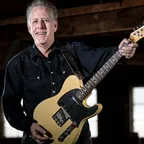
Keith Wyatt
Educator
—
Genres
About this course
Keith Wyatt is the teacher's teacher, the musician's musician and without a doubt, one of the coolest people on the planet. Already tuned in to Keith Wyatt? Don't even think about it - skip ahead and pick up the new video version of Blues Bash immediately.
For those of you not yet acquainted with Keith ... he tours with the legendary Blasters, has published countless books and DVDs on the blues, authored dozens of articles, conducts seminars all over the world, and is an esteemed Director at the Guitar Institute of Technology (GIT), where he has taught and developed curriculum for over two decades.
As you might imagine, you'd win a lottery before you'd wrangle a private lesson from this top cat. That's why Keith produced these blues tutorials as if he were sitting down one-on-one with a student, over the course of 12 private sessions. Blues Bash will seriously overhaul your blues chops without dragging you through the usual assortment of scales, modes and theory.
Keith starts off the series with a killer blues primer (NOT for beginners only) and then expands into a variety of essential techniques, rhythm patterns, voicings, tricks of the blues trade, and thorough examinations of the style of Muddy, Booker T, BB, Lightning Hopkins, Albert Collins, Albert King and Steve Cropper.
For those of you not yet acquainted with Keith ... he tours with the legendary Blasters, has published countless books and DVDs on the blues, authored dozens of articles, conducts seminars all over the world, and is an esteemed Director at the Guitar Institute of Technology (GIT), where he has taught and developed curriculum for over two decades.
As you might imagine, you'd win a lottery before you'd wrangle a private lesson from this top cat. That's why Keith produced these blues tutorials as if he were sitting down one-on-one with a student, over the course of 12 private sessions. Blues Bash will seriously overhaul your blues chops without dragging you through the usual assortment of scales, modes and theory.
Keith starts off the series with a killer blues primer (NOT for beginners only) and then expands into a variety of essential techniques, rhythm patterns, voicings, tricks of the blues trade, and thorough examinations of the style of Muddy, Booker T, BB, Lightning Hopkins, Albert Collins, Albert King and Steve Cropper.
Release date: 06/10/2005 • 1h 02m runtime
Sample lessons
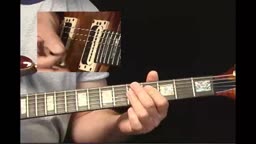
Blues Primer
Part 2
Down Home
Part 1
Down Home
Part 2
Sweet Blues
Part 1
What's included
60 lessons • 30 charts • 30 Jam Tracks
Welcome to Blues Bash! This interactive video course features a collection of blues lessons from arguably the top blues instructor on the planet; Keith Wyatt, top performer, recording artist, author of countless books and DVDs, and currently director at the world reknown GIT. These lessons were originally produced as audio lessons for several of the major guitar magazines dating back several years. Keith and TrueFire selected this particular collection of lessons to comprise a comprehensive and sometimes eclectic blues course that spans a variety of styles and techniques, for intermediate to advanced players. Each of the lessons features the original text and original audio lesson from Wyatt (click the JAM button for Keith's audio), however we've also included a video version for each example as well as PowerTab to accelerate the learning process. Ready to dig in?! Learning to play the blues is like learning a foreign language. You can master every grammar book and still not be able to speak a word until you spend some time actually speaking. The very thing that makes the blues what it is - its passion, its personality - are the hardest things to convey on paper. So realize that, like all the great blues players who came before you, you will have to spend some time listening, jamming and practicing - the natural and ideal ways to learn the language of the blues. This primer can provide some ideas to think about as you do these things. Once you learn the language, you'll spend the rest of your life working on what you want to say with it. Finding your own voice is what it's really all about.
Welcome to Blues Bash! This interactive video course features a collection of blues lessons from arguably the top blues instructor on the planet; Keith Wyatt, top performer, recording artist, author of countless books and DVDs, and currently director at the world reknown GIT. These lessons were originally produced as audio lessons for several of the major guitar magazines dating back several years. Keith and TrueFire selected this particular collection of lessons to comprise a comprehensive and sometimes eclectic blues course that spans a variety of styles and techniques, for intermediate to advanced players. Each of the lessons features the original text and original audio lesson from Wyatt (click the JAM button for Keith's audio), however we've also included a video version for each example as well as PowerTab to accelerate the learning process. Ready to dig in?! Learning to play the blues is like learning a foreign language. You can master every grammar book and still not be able to speak a word until you spend some time actually speaking. The very thing that makes the blues what it is - its passion, its personality - are the hardest things to convey on paper. So realize that, like all the great blues players who came before you, you will have to spend some time listening, jamming and practicing - the natural and ideal ways to learn the language of the blues. This primer can provide some ideas to think about as you do these things. Once you learn the language, you'll spend the rest of your life working on what you want to say with it. Finding your own voice is what it's really all about.
Any blues primer must begin with a discussion of rhythm. The shuffle remains the basis of both rhythm and lead playing in the blues, so let's make sure you understand exactly what a shuffle feel is. The shuffle is a rhythmic pattern based on eighth-note triplets (three notes per beat). On the printed page, triplets look like Figure 1. To get a shuffle feel, tap your foot at a medium tempo and play an A barre chord in triplets. Use all downstrokes and make sure all the notes are evenly spaced. Now omit the middle note of each triplet. This lopsided feel is the shuffle and it's written like this (see Fig. 2). Since shuffle rhythms are somewhat cumbersome to notate, it is quite common to write them as eighth-notes and indicate the proper feel by writing the word "shuffle" at the beginning of the song, together with the symbol shown in Figure 3. Now let's play a shuffle groove. The first pattern (see Fig. 4) is probably the most common, "one size fits all" blues riff. Even so, there are a few things you need to know to make it sound right: Use all downstrokes. Accent every downbeat (where your foot hits the floor). Mute the strings lightly with the heel of your picking hand. "Bounce" with your fretting hand, applying pressure on the downbeats and releasing it slightly on the upbeat. This, more than anything, creates the proper feel by keeping the notes from running together. Most important: listen to some Jimmy Reed records and soak up the rhythm feel.
Any blues primer must begin with a discussion of rhythm. The shuffle remains the basis of both rhythm and lead playing in the blues, so let's make sure you understand exactly what a shuffle feel is. The shuffle is a rhythmic pattern based on eighth-note triplets (three notes per beat). On the printed page, triplets look like Figure 1. To get a shuffle feel, tap your foot at a medium tempo and play an A barre chord in triplets. Use all downstrokes and make sure all the notes are evenly spaced. Now omit the middle note of each triplet. This lopsided feel is the shuffle and it's written like this (see Fig. 2). Since shuffle rhythms are somewhat cumbersome to notate, it is quite common to write them as eighth-notes and indicate the proper feel by writing the word "shuffle" at the beginning of the song, together with the symbol shown in Figure 3. Now let's play a shuffle groove. The first pattern (see Fig. 4) is probably the most common, "one size fits all" blues riff. Even so, there are a few things you need to know to make it sound right: Use all downstrokes. Accent every downbeat (where your foot hits the floor). Mute the strings lightly with the heel of your picking hand. "Bounce" with your fretting hand, applying pressure on the downbeats and releasing it slightly on the upbeat. This, more than anything, creates the proper feel by keeping the notes from running together. Most important: listen to some Jimmy Reed records and soak up the rhythm feel.
Now let's apply this pattern to a 12-bar blues progression in A (see Fig. 5). Before beginning, you should be aware of the following: The Roman numeral appearing above each chord indicates its relationship to the key. In A major, A is the first, or I chord, D is the fourth, or IV chord, and E is the fifth, or V chord. The IV chord (D) in bar 2 is called the "quick change." It's just as common for a blues progression to stay on the I chord for the first four bars. The last two bars are called the turnaround, since they prepare us for the repeat back to the beginning of the progression. The approach to the V chord (E7) from a half-step above (F7) is a standard turnaround maneuver. (More on turnarounds in the section on soloing.) This progression uses the same basic riffs that are in Figure 4, the pattern also applied to the IV and V chords. You must live, breathe, eat and sleep this progression until it requires about as much thought as putting on a T-shirt. It is the foundation of the blues style. If you don't already know it stop and memorize it on your instrument within the next 10 minutes!
Now let's apply this pattern to a 12-bar blues progression in A (see Fig. 5). Before beginning, you should be aware of the following: The Roman numeral appearing above each chord indicates its relationship to the key. In A major, A is the first, or I chord, D is the fourth, or IV chord, and E is the fifth, or V chord. The IV chord (D) in bar 2 is called the "quick change." It's just as common for a blues progression to stay on the I chord for the first four bars. The last two bars are called the turnaround, since they prepare us for the repeat back to the beginning of the progression. The approach to the V chord (E7) from a half-step above (F7) is a standard turnaround maneuver. (More on turnarounds in the section on soloing.) This progression uses the same basic riffs that are in Figure 4, the pattern also applied to the IV and V chords. You must live, breathe, eat and sleep this progression until it requires about as much thought as putting on a T-shirt. It is the foundation of the blues style. If you don't already know it stop and memorize it on your instrument within the next 10 minutes!
It's very important for a rhythm player to use dynamics (volume contrasts) to maintain the listener's interest. The most pronounced dynamics usually occur between vocal and solo choruses, the latter often being the louder and more intense. Figure 6 shows a beefed-up version of the last rhythm pattern containing a moving bass line within the riff. Play this comp (accompaniment) pattern boldly and aggresivley behind a soloist to help pump up the energy level. This riff works well in the key of A because you can use open strings . In other keys it's a little more difficult to finger - but still not impossible. You can pick up similar ideas by listening to bass players and adapting their lines to the guitar. One of the strongest shuffle grooves of all is created when the bass lays down a walking line (outlining the chords with quarter-notes) while the guitar plays on the eighth-note upbeats. On the downbeats, strum downward while releasing the left-hand finger pressure to prevent the chord from ringing. It should sound something like this: "chunk-CHORD-chunk-CHORD-chunk-CHORD-chunk-CHORD," etc. The next example (see Fig. 8) is based on the concept of a horn section. Imagine four horn players all blowing a rhythmic riff in unison. This is what it translates to on the guitar. To get that tight, authentic sound, pluck all the notes with your four right-hand fingers. B.B. King's Live At The Regal contains numerous examples of exceedingly cool horn-section riffs.
+ 53 more lessons
Reviews
No reviews yet
Complete this course and be the first to share your experience.
Stop searching. Start improving with All Access.
Try 14 days free. Cancel any time.
